

Views: 3 Author: Site Editor Publish Time: 2024-12-23 Origin: Site
In a concerning trend that has emerged within the industrial manufacturing sector, experts are sounding the alarm over the safety implications of non-coaxial laser beams and nozzles. Recent reports indicate that misalignment of these critical components not only compromises operational efficiency but also poses significant risks, including the emergence of sparks that can lead to dangerous situations.
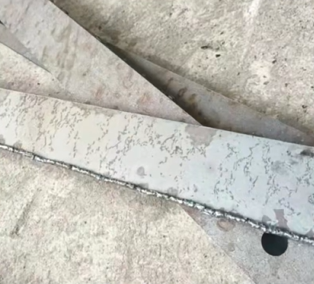
The precision of laser cutting is a hallmark of modern manufacturing techniques, where lasers are employed for their ability to produce clean and accurate cuts in various materials. However, when the laser beam and the nozzle are not perfectly aligned, the results can be catastrophic. The misalignment often leads to the production of single cross-section slag—an unsightly residue that can impede the quality of finished products.
Many manufacturers are facing challenges as they grapple with the issue of non-coaxiality. The misalignment can arise from various factors, including equipment wear and tear, improper installation, or even poor maintenance practices. When the laser beam strikes off-center, it can cause the material being cut to not only burn unevenly but also to create excess heat, resulting in sparks that can fly dangerously in all directions.
This issue was highlighted in a recent incident at a local manufacturing plant, where a misaligned laser cutter resulted in a fire that caused significant damage to both equipment and surrounding workplace areas. Witnesses report that the sparks generated were not only alarming but also posed a direct hazard to employees who were present at the time. Luckily, a quick response from the plant’s safety team prevented serious injury, but it serves as a sobering reminder of the potential dangers posed by laser cutting technologies when not properly calibrated.
Furthermore, the impact of burnt nozzles cannot be understated. When nozzles become damaged due to excessive heat generated from misalignment, they can lead to further complications in the cutting process. This not only contributes to increased downtime—resulting in financial losses for manufacturers—but also raises the stakes for workplace safety. Burnt nozzles can lead to inconsistent cutting, further exacerbating the issue of slag accumulation and increasing the likelihood of operational hazards.
In response to these rising concerns, industry leaders are calling for enhanced training programs for operators and technicians. Ensuring that personnel are well-versed in the importance of maintaining proper alignment between the laser beam and the nozzle is paramount. Training should focus not only on the technical aspects of equipment operation but also on the critical nature of regular maintenance and the identification of early signs of misalignment.
Moreover, investment in advanced monitoring technologies that can detect misalignment before it becomes a significant issue is gaining traction. These systems can provide real-time feedback to operators, allowing for immediate adjustments and mitigating the risk of sparks and associated hazards. By adopting such proactive measures, manufacturers can create a safer working environment while also improving the quality of their products.
Industry experts are also advocating for stricter regulatory oversight regarding the maintenance and operation of laser cutting equipment. As the technology continues to evolve, it is essential that safety standards keep pace to ensure that best practices are followed across the sector. Enhanced guidelines and regulations could serve to significantly reduce the risk of incidents resulting from misaligned laser beams and nozzles.
As the manufacturing sector continues to rely on cutting-edge technologies, the importance of safety cannot be overstated. The trend of non-coaxial laser beams and burnt nozzles serves as a critical reminder that technological advancement must be matched with an unwavering commitment to workplace safety. Companies must prioritize regular equipment checks, employee training, and adherence to safety protocols to safeguard against the dangers of misalignment.

The coaxial adjustment steps are to first set the focus to 0 focus in the system and the spot power to 5%-10%
Then use a small nozzle, and then take a piece of transparent tape and gently stick it on the tip of the nozzle
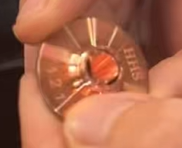
Press the point to shoot out the light, be careful not to put your hands below, and then see which direction the center point on the tape is offset
Insert the two dimming knobs of the laser head with an Allen wrench,
Rotate according to this reference content until the coaxial returns to the center of the nozzle
The following issues should also be noted during the spot shooting process:
Problem 1: No light can be shot, the light offset is too large and the laser is not shot on the tape, and the spot shooting duty cycle is too small to cause no light
Solution: 1. Change to a larger nozzle 2. Stick it directly on the ceramic ring 3. The duty cycle can be increased by 2% each time
Problem 2: The spots on the transparent tape are too large during spot shooting (punched through)
Solution: 1. The cutting focus for spot shooting has not changed to 0 focus, it has changed to 0 focus 2. The spot shooting duty cycle is too large, reduce the duty cycle.
